
CFTC Welcomes New Chairman, Which Way Will Crypto Regulation Go?


Original Title: "New Head of the CFTC Takes Office! Can He Uphold the Half of U.S. Financial Regulation?"
Original Author: KarenZ, Foresight News
The U.S. Commodity Futures Trading Commission (CFTC) has officially welcomed its new head.
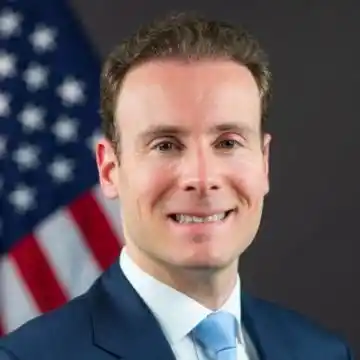
According to a statement released by the CFTC on December 22, 2025, Michael Selig was sworn in on the same day to become the agency's 16th chairman in history.
Appointment Background
Michael Selig was nominated by U.S. President Trump on October 27, 2025, and was confirmed by the U.S. Senate on December 18. This appointment marks the Trump administration's reshaping of the financial regulatory system, particularly in establishing a regulatory framework in the emerging digital asset market.
However, the nomination process was not without obstacles. Trump initially nominated former CFTC commissioner and former policy director of a16z's crypto division, Brian Quintenz, but ultimately withdrew the nomination due to resistance from the cryptocurrency industry. One reason was a dispute between Gemini's Tyler Winklevoss and Cameron Winklevoss and Brian Quintenz. In addition, a source familiar with the matter told The Block that there were also concerns focused on a16z's lobbying activities, leading to Brian Quintenz being sidelined.
Subsequently, Michael Selig emerged as the new nominee, having previously served as the chief legal officer of the SEC's crypto task force. The Senate Agriculture Committee advanced his nomination along party lines, leading to full Senate confirmation.
Michael Selig's appointment comes after a long period of interim leadership at the CFTC. The former acting chairman, Caroline D. Pham, announced her resignation on the same day and will later join MoonPay as Chief Legal Officer and Chief Executive Officer.
Who Is Michael Selig Sworn?
Prior to becoming the new chairman of the CFTC, Michael Selig had accumulated extensive experience in both the public and private sectors.
According to an official statement, he began serving as Chief Legal Advisor to the U.S. Securities and Exchange Commission (SEC) Cryptocurrency Special Task Force in March 2025, while also acting as Senior Advisor to SEC Chairman Paul S. Atkins.
In this role, Michael Selig Sworn helped develop a clear regulatory framework for the digital asset securities market, coordinated the rule systems of both the SEC and CFTC, promoted institutional rule modernization to accommodate emerging technologies, and put an end to enforcement-centric regulation. Additionally, he participated in the President’s Working Group on Digital Assets and contributed to the report "Enhancing America's Leadership in Digital Financial Technology."
Notably, the "Enhancing America's Leadership in Digital Financial Technology" report was a presidential executive order released by the White House on January 23, 2025. This executive action aimed to advance America's leadership in the digital asset and financial technology sectors while safeguarding economic freedom. Key aspects included supporting the responsible development and use of digital assets, blockchain technology, and related technologies across all economic sectors; prohibiting CBDCs; protecting dollar sovereignty; and endorsing dollar-backed stablecoins. Furthermore, this executive order facilitated the establishment of the President’s Digital Asset Market Working Group, providing clear policy direction and robust legal support for the development of the U.S. digital asset industry.
Further reading: "What Is Included in the First Crypto Executive Order Signed by Trump?"
Prior to this role, from September 2015 to March 2025, Michael Selig Sworn served as an Associate at three law firms, and later in 2022, he held positions as Legal Counsel and Partner at the law firm Willkie Farr & Gallagher LLP. According to CFTC official publications, Michael Selig Sworn primarily focused on derivatives and securities regulatory matters. During his private practice, he provided legal services to numerous clients regulated by the CFTC, including commercial end-users, futures commission merchants, commodity trading advisors, swap dealers, designated contract markets, derivatives clearing organizations, and digital asset companies. Selig advised clients on compliance with the Commodity Exchange Act and CFTC rules, covering areas such as registration applications and obligations, enforcement matters, and complex transactions.
It is worth mentioning that Michael Selig Sworn began his professional career in 2014 as a legal assistant to then-CFTC Commissioner J. Christopher Giancarlo before transitioning to a career in private practice.
Academically, Michael Selig Sworn holds a law degree from The George Washington University Law School and has served as an articles editor for The George Washington Law Review. He also holds an undergraduate degree from Florida State University.
CFTC New Chairman's Regulatory Vision: Fostering 'Made in America' Innovation to Cement Leadership in Crypto
In his inaugural statement, Michael Selig Sworn expressed gratitude to Trump for the nomination and outlined his understanding of the future direction of the CFTC, revealing his emphasis on balancing innovation and regulation.
He noted that it is a crucial time for the CFTC with numerous new technologies, products, and platforms emerging, and retail investor participation in the commodity markets reaching historic levels. Selig particularly emphasized the importance of the upcoming congressional Digital Asset Market Structure Act that he said would solidify the U.S.'s position as the 'crypto capital of the world.' He also stated, "The CFTC will conquer these critical areas, ensuring that future innovation is 'Made in America.'
Regarding the CFTC's role, Michael Selig Sworn provided a clear mandate: "In the new market of America's financial golden age, no agency is better suited than the CFTC to set common-sense rules."
Meanwhile, outgoing Acting Chairman Caroline D. Pham, in her departure statement, welcomed Michael Selig Sworn's appointment, lauding his pragmatism, focus on efficiency, and ability to balance innovation with market integrity. Additionally, Pham mentioned that by 2025, the CFTC has already set 'Promoting Responsible Innovation and Fair Competition' as a core mission, especially as regulatory oversight expands in emerging areas like digital assets, cryptocurrencies, and prediction markets. This will lay the groundwork for Michael Selig Sworn's future work.
Potential Impact: Shift in Regulation, Accelerated Coordination, and Coexisting Challenges
How Will Michael Selig Sworn's Appointment Reshape the U.S. Financial Regulatory Landscape, Especially in the Digital Asset Space? Based on his hearing statements, past experiences, and industry trends, the impact direction has gradually become clear.
Shift in Regulatory Logic: From "Strict Enforcement" to "Heavy Rulemaking," Reducing the Burden of "Tech Compliance"
In a previous hearing, Michael Selig Sworn repeatedly emphasized that the CFTC is the appropriate regulator for spot digital commodity trading and supported Congress swiftly advancing legislation on digital asset market structure. This is highly consistent with the Trump administration's goal of "making America the Crypto Capital."
During the Senate confirmation hearing, as reported by WilmerHale, Selig repeatedly emphasized caution against "overregulation" and "generalized enforcement." He admitted to witnessing firsthand regulatory agencies overlooking the actual impact of their actions, becoming obsessed with enforcement over regulation, ultimately pushing businesses overseas and entangling entrepreneurs in red tape. To support this view, he also shared a personal experience: assisting an agricultural company in responding to a large-scale CFTC investigation triggered by nothing more than a "harmless error in swap data reporting." Yet, this company was forced to divert significant time and resources from its core operations to address it, severely impacting normal business activities.
This direction aligns closely with Pham's emphasis on shifting the enforcement focus to avoid unnecessary regulatory burdens.
Will Swiftly Advance the Implementation of Legislation Related to the Digital Asset Market Structure
Michael Selig Sworn has clearly stated that the CFTC will swiftly advance the implementation of legislation related to the digital asset market structure and keep pace with market developments.
Coordinate SEC and CFTC Efforts, Advance a Unified Framework
From a broader perspective, Michael Selig Sworn's SEC background will help coordinate the efforts of the two major regulatory bodies (SEC and CFTC), reduce duplicate regulation, and promote a unified framework. This may accelerate the standardization of the spot crypto market.
According to the 166-page "Enhancing U.S. Leadership in Digital Financial Technology" report from the previous "Presidential Working Group on Financial Markets," the SEC and CFTC should coordinate to ensure an efficient rulemaking process and solicit public input on rulemaking proposals. Furthermore, the report suggests that the CFTC should clearly have oversight of non-securities digital asset spot markets. SEC and CFTC registered entities could conduct diversified businesses under an efficient licensing framework to prevent regulatory arbitrage. SEC-registered entities should be able to offer digital asset securities trading and engage in non-securities digital asset trading as defined by Congress. CFTC-registered entities should be able to offer digital commodity derivative trading, retail digital commodity trading, and other CFTC-regulated products as well as non-securities digital assets designated by Congress.
What Challenges Lie Ahead?
Michael Selig Sworn also faces real challenges, such as resource and personnel gaps, and committee composition imbalance.
Several senators have raised concerns about the CFTC's resources and staffing. According to WilmerHale's report, since the beginning of Trump's second term, the CFTC's staff has been reduced by about 20%, with currently about 600 employees. If Congress grants the CFTC more authority over crypto regulation, additional funding and staff support will be needed. Unfortunately, Selig was vague about the specific resource needs during the hearing.
Another notable issue is the composition of the CFTC's commission members. According to the official website, the CFTC's commission consists of five commissioners appointed by the President with Senate advice and consent, serving staggered five-year terms. However, after the acting chairman stepped down, the newly appointed Michael Selig Sworn found himself in a unique position of being the sole commissioner. Currently, Michael Selig Sworn is the only commissioner at the CFTC, breaking the usual checks and balances and significantly increasing the Trump administration's policy influence over the CFTC. This "single-commissioner dominance" dynamic has also sparked discussions about regulatory neutrality.
When asked if the vacant seats set a bad precedent, Michael Selig Sworn refused to comment, stating that nomination decisions should be made by the President. This evasive response somewhat reflects the sensitivity of this unusual situation. When asked if the vacant seats set a bad precedent, Selig refused to comment, stating that nomination decisions should be made by the President. This evasive response somewhat reflects the sensitivity of this unusual situation.
A key question is whether Michael Selig Sworn will continue the reform efforts initiated by Caroline D. Pham. Judging from their remarks during the power transition, this seems highly likely. Caroline D. Pham's appraisal of Michael Selig Sworn indicates that these two leaders have considerable consistency in regulatory logic, both emphasizing the balance between innovation and market integrity.
Furthermore, Michael Selig Sworn's focus on digital assets and emerging market structures, as well as his role in formulating an SEC and CFTC coordination framework, suggests that he may advance further coordination between these two key financial regulatory agencies.
How Michael Selig Sworn will balance innovation encouragement with risk management and advance broader regulatory responsibilities with limited resources will be a key focus of the U.S. financial markets in 2026.
Reference Documents:
<1> https://www.cftc.gov/PressRoom/PressReleases/9164-25
<2> https://www.wilmerhale.com/en/insights/client-alerts/20251218-michael-selig-confirmed-as-cftc-chairman---six-issues-to-watch-in-2026
<3> https://www.linkedin.com/in/michaelselig/
<4> https://www.cftc.gov/About/Commissioners/FormerCommissioners/index.htm?page=0
You may also like

Bitcoin Trading Guide 2026: Strategies for Experienced Traders

What Is XAUT and PAXG? Why Tokenized Gold Is Booming in 2026

Cryptocurrency CEXs are flocking to sell US stocks, and traditional brokerages are facing an "uninvited guest."

Will the SpaceX IPO Hurt Bitcoin? Here's What Traders Are Watching
Foreign selling in the South Korean stock market accelerates, with cumulative net sales reportedly reaching $75 billion this year
On June 9, The Kobeissi Letter, citing Goldman Sachs data, reported that global investors are selling South Korean stocks at an unusually rapid pace. In the latest trading session, foreign investors sold about $801 million worth of Kospi constituent stocks again; total foreign outflows last week reached about $10 billion, and the market has been in net foreign selling on nearly every trading day over the past month. According to the data cited in the report, foreign investors have sold about $75 billion worth of South Korean stocks so far this year. Meanwhile, South Korean retail and institutional investors together recorded roughly $69 billion in net buying over the same period, suggesting that the market’s main buying support has come from domestic capital rather than returning overseas funds. The information currently disclosed still mainly comes from The Kobeissi Letter’s retelling and Goldman Sachs data summaries, while public details on the statistical period and the specific definition of “selling” remain relatively limited.

Fortune Warns of Strategy’s Financing Structure Risks as Bitcoin Premium Narrows
Fortune warned that Strategy’s Bitcoin treasury model faces growing financing risks as MSTR’s net asset premium narrows and preferred stock dividend pressure increases.

Ferrari Challenge Le Mans: Carl Moon to Dominate in WEEX Livery

Sahara AI Responds to SAHARA’s Sharp Drop: No Contract or Product Security Issues Found, Internal Investigation Underway
Sahara AI responded to SAHARA’s 60% price drop, saying no token contract or product security issues have been found and an internal investigation is underway.

WEEX Deposit/Withdrawal Dynamic Island: Your Asset Status, Always in Sight

Scaling Crypto Derivatives: The Digital Asset Infrastructure Behind High-Volume Trading
In the fast-moving digital asset ecosystem, derivatives platforms face an extreme architectural test. High-leverage futures markets demand more than just standard security—they require absolute operational precision, zero-latency matching engines, and ironclad structural scalability, all while navigating intense market volatility.
As global platforms scale to meet these demands, the industry is shifting away from rigid, monolithic setups toward a more agile, "decoupled" infrastructure philosophy.
The Blueprint for High-Volume Copy TradingFor elite global exchanges like WEEX (founded in 2018), this architectural choice becomes critical when scaling high-volume retail features like social copy trading. When thousands of users automatically mirror the real-time strategies of elite traders simultaneously, it triggers sudden, monumental spikes in concurrent transactional volume.
To prevent execution latency or settlement bottlenecks during these peak volatility events, a platform's primary engine must remain entirely dedicated to risk management, copy-trade synchronization, and order matching.
The Architectural Rule: New-generation platforms must separate front-end user execution engines from heavy backend infrastructural overhead to eliminate operational friction.
By separating these layers, platforms can maintain complete sovereignty over their trading environments and user experiences while strategically aligning with institutional-grade infrastructure ecosystems. This strategic framework allows modern exchanges to leverage advanced Digital Asset Custody infrastructure such as Cobo’s behind the scenes, ensuring that backend wallet management scales elastically alongside trading spikes.
Capitalizing on Market Momentum and 400× LeverageIn a derivatives arena where platforms offer up to 400× leverage on perpetual contracts, capital efficiency and market agility are core business metrics. To capture market momentum, an exchange needs the ability to rapidly expand its asset offerings, supporting everything from legacy crypto assets to sudden, trending altcoins across a massive library of trading pairs.
Adopting a flexible, scalable Wallet-as-a-Service (WaaS) solution such as Cobo’s could completely rewrite the development timeline for high-growth exchanges. Instead of spending months of engineering capital building out custom backend wallet architectures for every new blockchain network, platforms can deploy localized infrastructure in days.
This agility allows platforms to instantly scale their listings to over a thousand trading pairs without compromising security or delaying time-to-market. It mirrors the exact operational advantages seen during high-velocity market events, similar to how advanced wallet infrastructure empowers platforms during sudden asset surges; allowing exchanges to pass that speed and liquidity directly to their global user base.
A Mature Foundation for GrowthThe synergy between trusted infrastructure ecosystems and global trading platforms represents the natural evolution of a maturing crypto market. As WEEX continues to scale its global spot and derivatives offerings for over 6 million users, adopting robust backend paradigms proves that platforms no longer have to compromise between cutting-edge trading velocity and uncompromised structural security.

Morning Report | BitMine increased its holdings by 126,971 ETH last week; trader Eugene announced his exit from the crypto market

Wang Chuan: How can one not feel anxious after the neighbor Old Wang made thirty times profit by investing in storage stocks? (Seven) - A quarter-century cycle

Get Paid to Onboard? Try WEEX’s New Homepage with Rewards for Registration, Deposit & Trade

WEEX Custom Layout: Build Your Perfect Trading Workspace in Seconds

See “Buy Walls” & “Sell Walls” Instantly: WEEX Launches the Depth Chart for Smarter Trades

What Is Quick Trade on WEEX? 2 Ways WEEX Ends Chart-Panel Jumping
Morning News | Five major virtual asset platforms in South Korea have experienced 57 incidents of hacking and system failures in six years; Grayscale submits registration application for Canton ETF
Should we escape the peak? The principle of the tail-end market in the stock market
Bitcoin Trading Guide 2026: Strategies for Experienced Traders
What Is XAUT and PAXG? Why Tokenized Gold Is Booming in 2026
Cryptocurrency CEXs are flocking to sell US stocks, and traditional brokerages are facing an "uninvited guest."
Will the SpaceX IPO Hurt Bitcoin? Here's What Traders Are Watching
Foreign selling in the South Korean stock market accelerates, with cumulative net sales reportedly reaching $75 billion this year
On June 9, The Kobeissi Letter, citing Goldman Sachs data, reported that global investors are selling South Korean stocks at an unusually rapid pace. In the latest trading session, foreign investors sold about $801 million worth of Kospi constituent stocks again; total foreign outflows last week reached about $10 billion, and the market has been in net foreign selling on nearly every trading day over the past month. According to the data cited in the report, foreign investors have sold about $75 billion worth of South Korean stocks so far this year. Meanwhile, South Korean retail and institutional investors together recorded roughly $69 billion in net buying over the same period, suggesting that the market’s main buying support has come from domestic capital rather than returning overseas funds. The information currently disclosed still mainly comes from The Kobeissi Letter’s retelling and Goldman Sachs data summaries, while public details on the statistical period and the specific definition of “selling” remain relatively limited.
Fortune Warns of Strategy’s Financing Structure Risks as Bitcoin Premium Narrows
Fortune warned that Strategy’s Bitcoin treasury model faces growing financing risks as MSTR’s net asset premium narrows and preferred stock dividend pressure increases.


