
The US Military is Obsessed with Stock and Crypto Trading, with Stock Tips Flying on the Aircraft Carrier Deck





Original Title: Top Gun Traders: Stock Bets and Crypto Culture Take Over the Military
Original Author: Konrad Putzier, The Wall Street Journal
Translation: Azuma, Odaily Planet Daily
On the Wednesday evening of the mission, U.S. Space Force Captain Gordon McCulloh sat in a military propeller plane, suspended in the calm and dim New Mexico night sky, when the group chat of his squadron suddenly exploded.
Squad members—some on the ground, some in the air—were collecting electromagnetic warfare-related data while also mulling over their investments. Google's stock had just surged in after-hours trading.
After landing, McCulloh saw the messages: a ground officer had sent a news screenshot, while another replied "To the moon." That day was turning out to be unusually lucrative for McCulloh and his comrades.
The U.S. military may be the world's most potent "investment club," and they are raking in the gains in this current bull market.
Active-duty servicemembers are amassing wealth from tech stocks and Bitcoin, exchanging investment advice on obscure cryptocurrencies on the aircraft carrier deck. As the market continues to hit new highs, the base parking lots are seeing more and more new Porsches and Hummers. Social media influencers in military uniforms are telling their followers that they too can become rich.
As a flight test engineer, McCulloh has heavily invested in companies related to nuclear energy. He is betting that the prosperity of AI data centers will further drive up electricity demand. So far, everything has been smooth sailing. Some of his stocks have more than doubled since the spring, although the 27-year-old officer is also pondering how long this rally can last.
"I have to admit, I don't understand why the market continues to rise unabated," he said. While there have been some recent fluctuations, stock prices have been soaring overall since April, boosting soldiers' net worth.
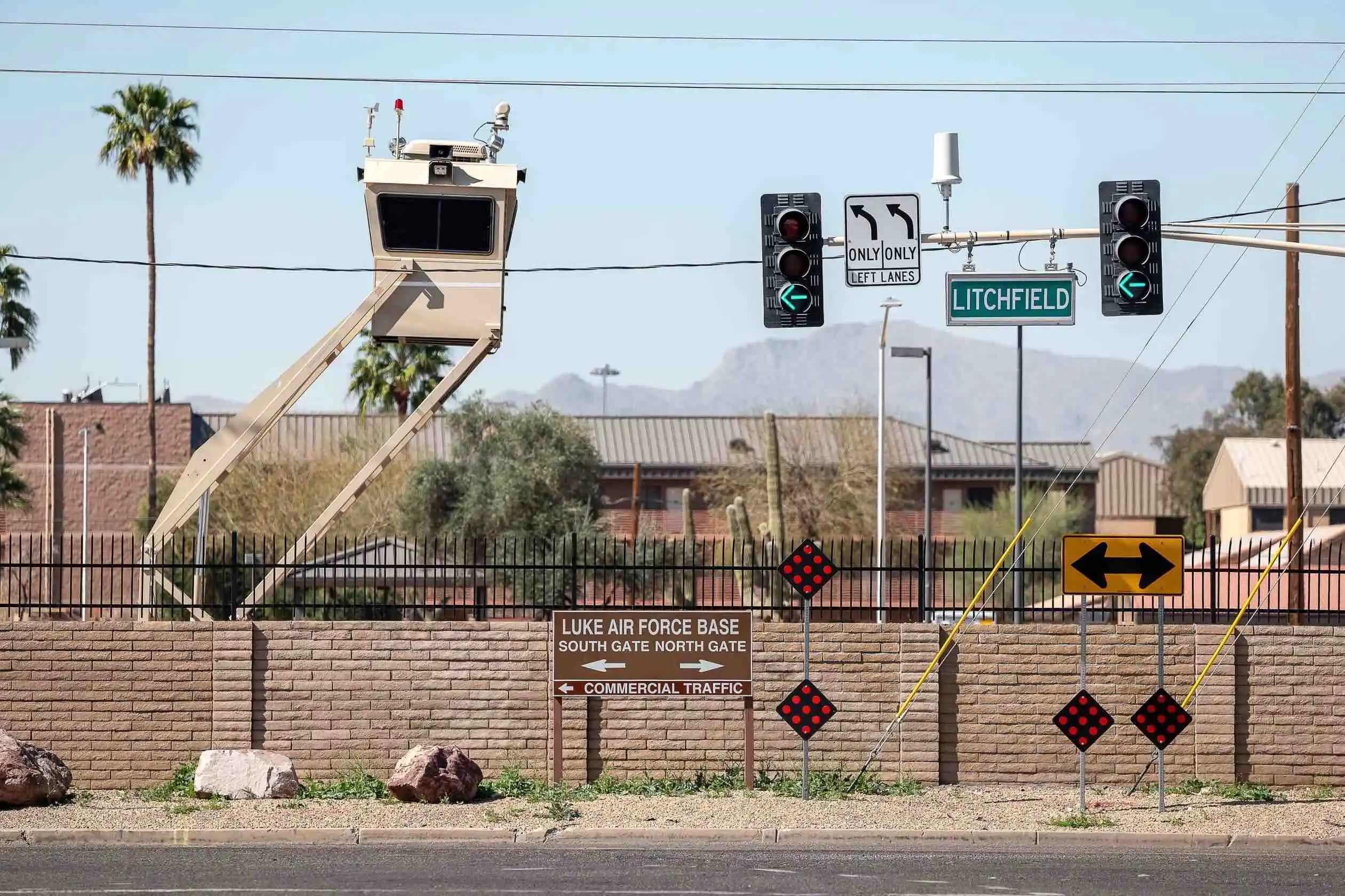
Luke Air Force Base, located in Phoenix, was one of the areas with the highest cryptocurrency declaration rate in the 2021 U.S. tax return.
Service members have been behind the cryptocurrency boom that began in the fall of 2020 and peaked in 2021. According to The Wall Street Journal's analysis of Internal Revenue Service (IRS) data, in 2020, among the 25 ZIP codes with the highest percentage of reported U.S. crypto income or transactions, 8 were near military bases. Bitcoin's price approximately quadrupled that year. By 2021, this proportion had risen to 11 out of the top 25.
IRS data shows that near Holloman Air Force Base in New Mexico, 16.3% of individual income tax returns in 2021 reported records of receiving, selling, exchanging, or disposing of cryptocurrency; near Luke Air Force Base in Arizona (19.4%) and Vandenberg Space Force Base in California (18.1%), the percentage was even higher. In comparison, only 4.1% of tax returns nationwide checked the same box.
In 2022, military bases lost this dominance—it's the latest annual data provided by the IRS. That year, as cryptocurrency prices plummeted, both inside and outside the bases, there was a sharp drop in reported crypto transactions.
But that year's cryptocurrency craze—and the concurrent meme stock frenzy—left an entire generation of service members addicted to investing.
While many service members are primarily long-term index fund investors, some engage in short-term speculation or concentrate a significant portion of their assets in a small number of stocks or cryptocurrencies. They are often young, having only experienced a rising market, and have limited means to hedge risks.
"If the market sees a significant pullback, they will definitely feel the pain," said financial advisor and Air Force veteran Brian O'Neill.
Some have already experienced such pain, suffering significant losses in a bad bet, but service members are more likely to talk about their wins than their losses. O'Neill said, "There is a culture of boasting here."
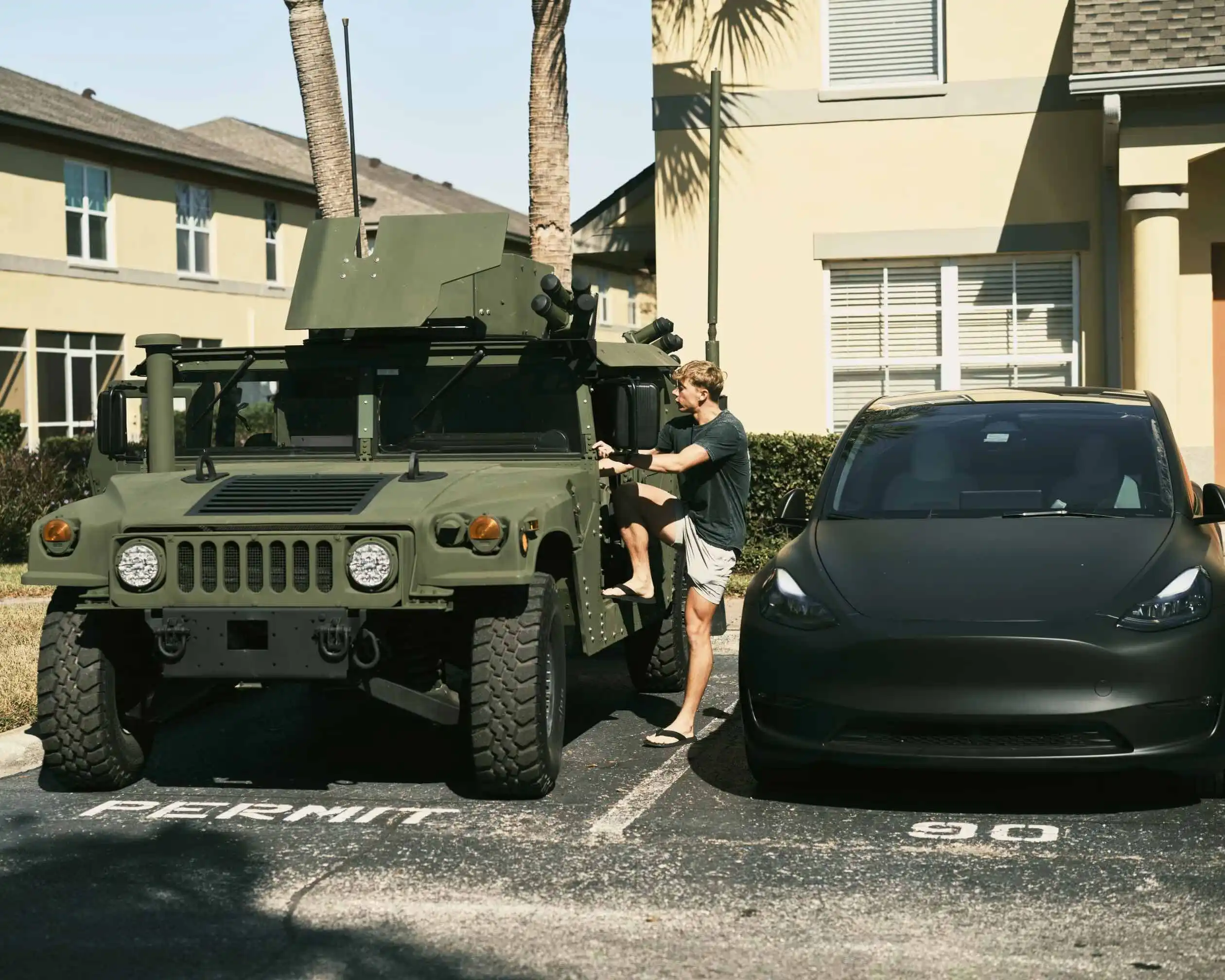
Saunders recently bought a Hummer with extra income, both as a treat for himself and to support his side hustle as a KOL.

This Coast Guard member records investment and financial advice videos at his home studio in St. Petersburg, Florida, and surrounding locations.
Saunders profited from Tesla stock, but he said he lost over $10,000 in a single day last winter while trading a leveraged financial product tied to MicroStrategy (the company that bought Bitcoin, now known as Strategy) stock. He has now mostly shifted to stock market index funds. He also earns a five-figure monthly income as a social media influencer on TikTok and Instagram.
His expertise is in providing financial advice to military personnel through videos.
Action Hotspot
Military bases are fertile ground for investment frenzy. They are packed with young people—many naturally inclined to take risks—with ample time, disposable income, and almost no taboos when it comes to discussing personal finance, as military salaries are openly transparent and rank-based. Although the military offers a pension after 20 years and unparalleled job security, they do not provide generous salaries or six-figure year-end bonuses.
The military community has long been active in the investment arena. Some utilize zero-down VA loans from the Veterans Affairs Department to purchase rental properties. In the early 1980s, during a period of high inflation, soldiers confined in nuclear missile submarines for months passed the time discussing gold bars and raw diamonds. By the late 1990s, tech stocks became the nation's obsession.
However, over the past two decades, two intertwined waves have greatly fueled a culture of wealth-building in the barracks: the rise of websites lowering the barrier to trading and later apps like Robinhood, and the ongoing war on terror.
Starting in the early 21st century, hundreds of thousands of troops were deployed to remote bases in Iraq and Afghanistan. They received hazardous duty pay, family separation allowances, and income tax exclusions. Suddenly, they had thousands of dollars in extra income and began looking for investment channels.
F-16 fighter pilot Shawn Walsh opened his first brokerage account in 2008 when stationed in Iraq. His primary mission was to bomb insurgents, but between executing strike missions, he would often be in full flight gear, spending hours in a small shed just a short taxi from his aircraft. There, with nothing to do, he and other pilots would discuss various investment strategies.
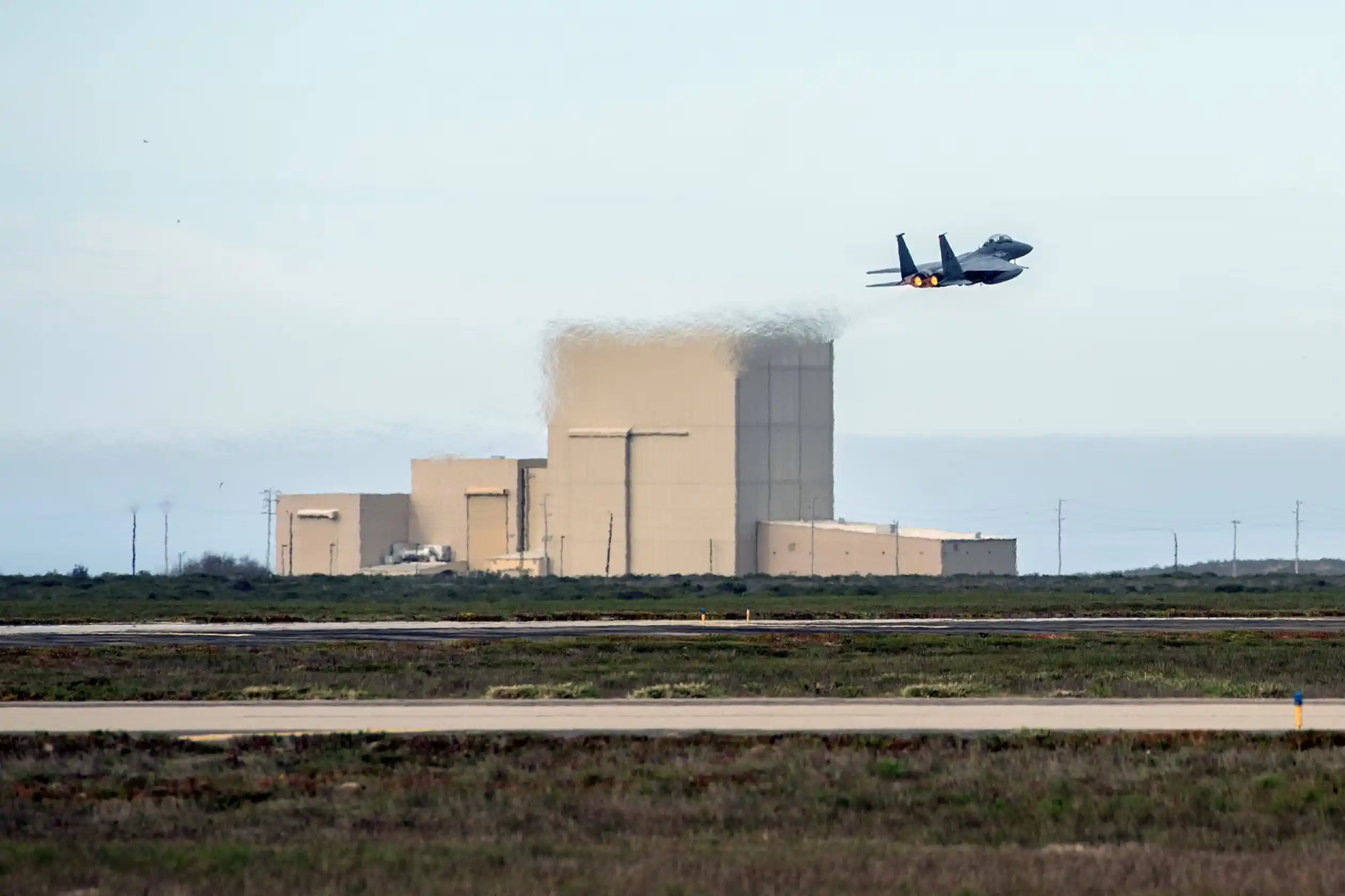
Multiple military bases, including Vandenberg Space Force Base on the central California coast, fueled the cryptocurrency frenzy from 2020 to 2021.
In 2013, Air Force transport pilot Spencer Reese flew back and forth between Kyrgyzstan and Afghanistan, transporting soldiers. "Each mission was a crash course in a different investment strategy," he said.
Someone told him about investing in gas stations and 7-Eleven convenience stores; another person recommended covered call options; and some were into Bitcoin. During the longer flights, Reese would read some investment books.
The military does have basic training courses on savings, budgeting, and investing, but word of mouth is often a more popular source of advice. While servicemembers are very competitive, they also have a strong sense of camaraderie—even in the investment field. If someone makes money, they will tell others because they want their comrades to make money too. Officers often pull out their phones to show others their investment account balances.
Cryptocurrency spread like wildfire in the military in the early 2020s. Navy Commander Zach Rodriguez deeply invested over $100,000—equivalent to half of his family's savings—into tokens like Chainlink, Polkadot, and Quant. A friend got him interested in cryptocurrency while he was aboard an aircraft carrier cruising the Pacific.

In 2020, Lieutenant Commander Zach Rodriguez's photo next to a helicopter, the Pacific cruise marked the beginning of his cryptocurrency learning journey.
As the value of the coins soared, he initially made significant gains but later faced a sharp downturn. According to him, he was also scammed out of $250,000 worth of cryptocurrency. Now, this helicopter pilot has become a "Bitcoin HODLer"—focusing on investing in Bitcoin and Bitcoin-related companies, and he says his holdings have grown to about $1 million.
The frenzy for meme stocks has similarly swept through the military with a similar force. Air Force Senior Airman Durelle Bailey, in 2021, was pursuing a master's degree at George Mason University in a classroom with over twenty active-duty servicemembers when one person mentioned a stock of an educational technology company called Chegg. The stock price had fallen, and according to that person, it was a great buy-the-dip opportunity.
"He said at that moment, 'Hurry, buy now, or it's going back up.'" Bailey recalled. Immediately, eight or nine people pulled out their phones and bought the stock.
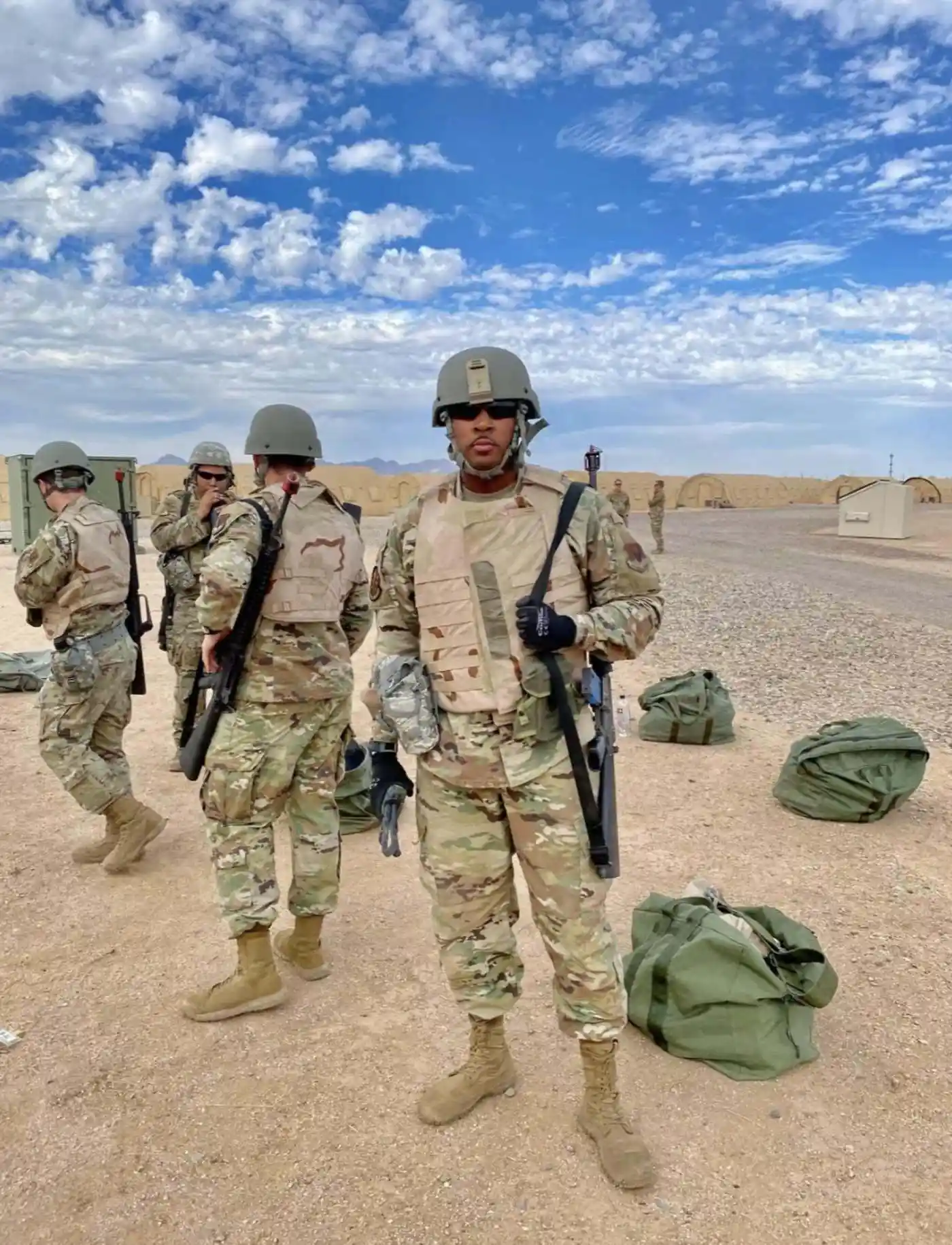
Master Sergeant Durelle Bailey, photographed in 2019 in Arizona. Over the past decade, his savings have grown from zero to a six-figure net worth.
At the time, Bailey had invested a few hundred dollars but ended up losing money. Chegg briefly surpassed $113 per share in early 2021, only to fall to under $25 by year-end, with the recent stock price closer to $1.
Wherever Bailey goes, stocks and cryptocurrencies are a common topic of conversation. "We talk about it in the barracks, in the gym, in the cafeteria," he says.
When Bailey joined the Air Force in 2015, he had no savings. Today, his and his wife's net worth has firmly reached six figures, largely thanks to stock index funds. At 31, he says, "Our future is secure."
New Wealth, New Worries
Around military bases, signs of rising wealth are everywhere.
Near a military base in Colorado, Army Second Lieutenant and helicopter pilot Eric Rawlings, currently deployed to the Middle East, says he recently bought a $10,000 Rolex to celebrate a milestone: the money he earned from stock investments exceeded his military pay for the first time.
He is not alone. "The cars driving around the base are all pretty extravagant," says the 29-year-old.
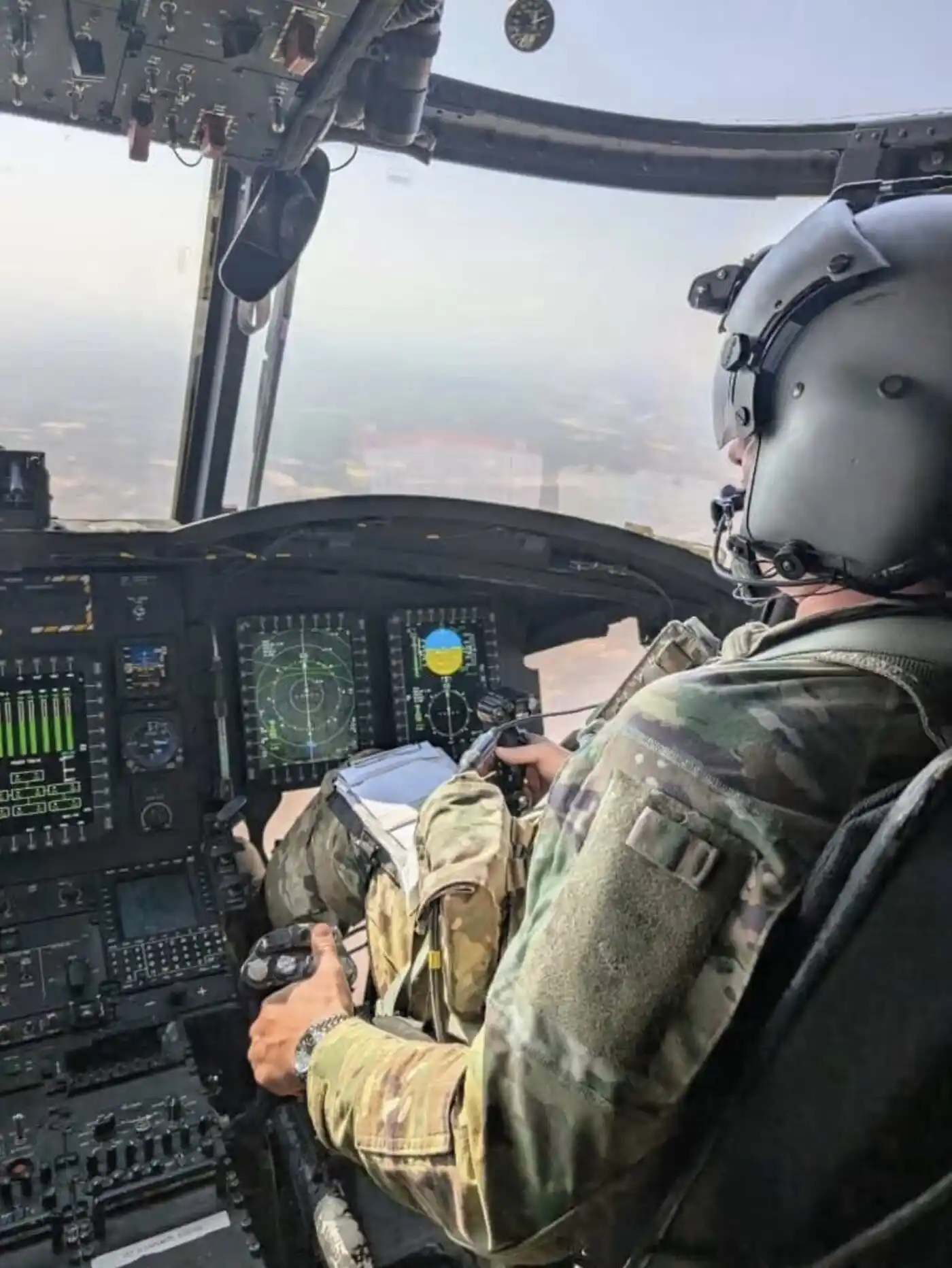
Second Lieutenant Eric Rawlings wearing the Rolex he bought to celebrate his investment success.
Some financial advisors and veterans worry that the good times may not last forever. With the price-to-earnings ratio near historic highs, stock indexes are increasingly dominated by a few tech giants.
"I'm concerned that we may be heading for a bubble burst," says retired Army officer David Ashcraft.
During the late 1990s tech boom, as a young lieutenant, Ashcraft bought stocks in Cisco and Sun Microsystems. After the market crash, his IRA account value plummeted from $10,000 to about $3,000. Since then, he has only invested in index funds.
He said, "If someone tells me they put all their money into cryptocurrency or just a few stocks, I would still be concerned."
Bonds have fallen out of favor among military personnel because their performance in recent years has been far behind that of stocks. Few people hold a large amount of cash.
Many military personnel believe they can take on more risk because they have job security and can still receive a guaranteed pension after 20 years of service. Even conservative investors are exposed to higher risks due to market structure. Space Force officer McCulloh, stationed in New Mexico, says that several technology and energy stocks now account for most of his net worth simply because they have risen so much.
However, high-risk bets can still go awry in a strong market. In 2023, Moises Gonzalez, a Marine Corps truck driver stationed in Albany, Georgia, lost $20,000 in a day trading gold and stocks despite his $38,000 annual salary.
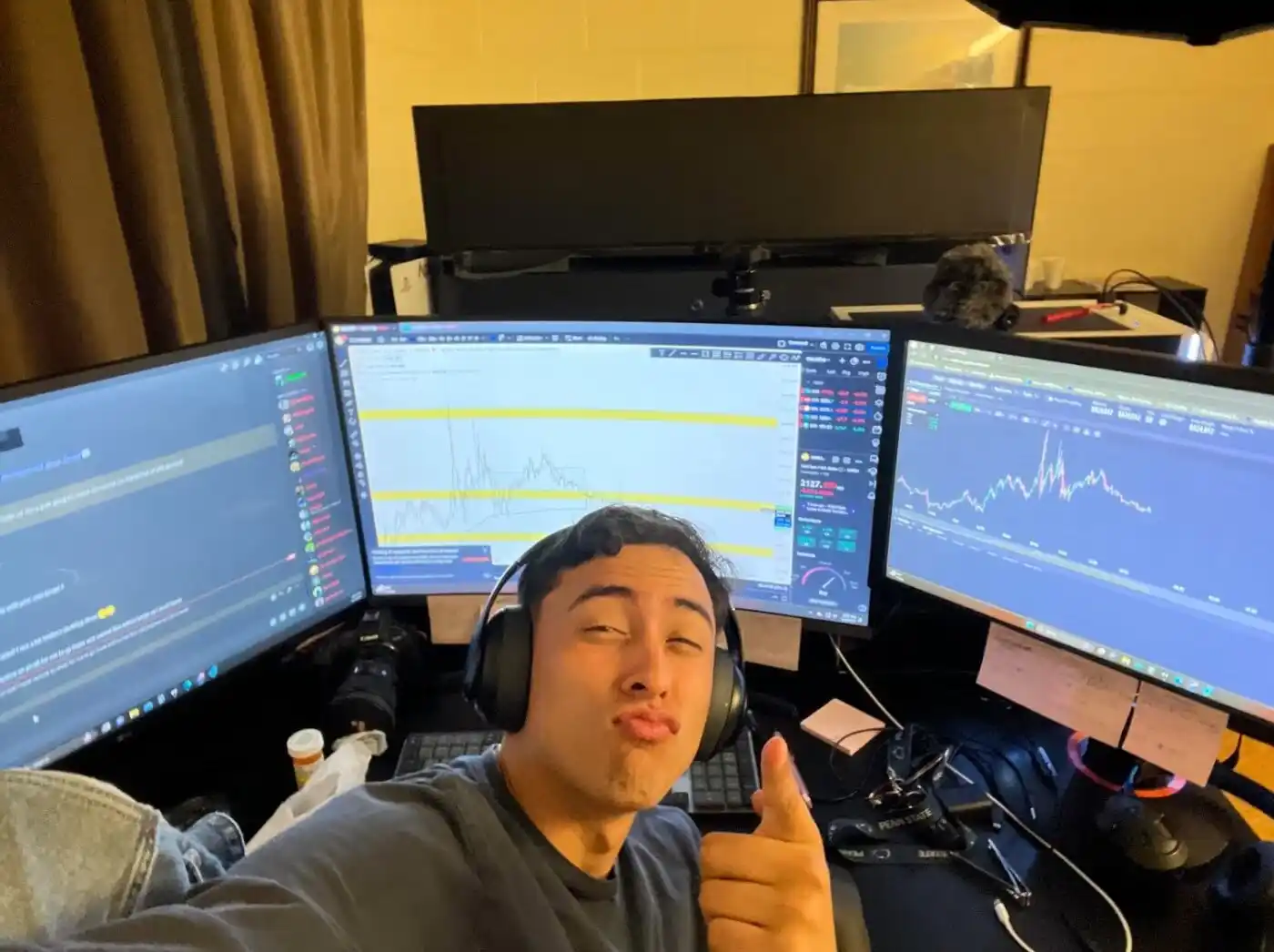
Moises Gonzalez experienced the highs and lows of day trading on the equipment in his base dorm.
"Some days I really couldn't take it because I just kept losing, kept losing, kept losing, kept losing," he said.
His largest single-day loss was $15,000, while his biggest gain was $6,000.
He set up three monitors in his base room—a sight that once raised an eyebrow during an inspection by a colonel—and he brought his laptop to the work vehicle dispatch yard to trade during the early morning downtime.
Over time, Gonzalez's skills improved. In 2024, he made $30,000 from day trading. A few months ago, he left the Marine Corps and moved to Hawaii to start trading full-time. The 25-year-old hopes to earn $10,000 a month in the market, but he hasn't reached that goal yet.
He said, "I can make $7,000 in three or four days and then lose it all on the fifth day."
You may also like

Latest research from 13 top universities including Cornell University: The current state, challenges, and misconceptions of the fusion of Crypto and AI
Deconstructing Anthropic: The Best AI Company, Possibly Also a Type of Organizational Invention
Apollo and Blackstone Reportedly Back $35 Billion Anthropic Chip Financing as Deal Details Remain Unclear
On June 9, according to currently available news alerts, Apollo and Blackstone Group participated in a $35 billion financing for an Anthropic “chip project.” Based on the original wording of the report, the funding has already been raised, but public information remains limited. The financing structure, use of proceeds, project entity, and whether Apollo and Blackstone participated through equity, debt, or project financing have not yet been disclosed.

Humanity Protocol Security Incident Escalates: More Than $31 Million Stolen From Related Addresses as Attacker Continues Selling H for ETH
On June 9, according to monitoring by Onchain Lens, more than $31 million has been stolen from addresses linked to Humanity Protocol, and the attack is still ongoing, with the hacker continuously swapping H tokens for ETH. Project founder Terence Kwok later confirmed the security incident on X, saying the issue involved a private key leak.

Bloomberg: As Bitcoin Weakens, Stablecoins and RWA Continue to Drive Expansion in Crypto Businesses
In June, Bloomberg reported that despite Bitcoin falling below $60,000 last week, wiping out about $235 billion in market value within seven days, and dropping close to 50% from last year’s peak, some core businesses in the crypto industry are still expanding, mainly in stablecoins, real-world asset tokenization (RWA), payments, and infrastructure. The report also noted that overall altcoin activity has contracted significantly: altcoin market capitalization has fallen from a peak of about $431 billion in November 2021 to around $170 billion, and among the tens of millions of tokens issued in recent years, fewer than 1,700 still maintain meaningful trading activity.

Galaxy Deep Research Report: How Hyperliquid's HIP-4 Upgrade Changes the Landscape of Prediction Markets?
Binance Research: RWA Market Expected to Expand Nearly 6x from Early 2025, with Public Equities and Onchain Payments Heating Up Together
In June, Binance Research said in its monthly market report that the real-world asset (RWA) market is expected to grow by about 589% from the beginning of 2025. Bond- and money market fund-related RWA expanded by about $6.5 billion, up 83% year over year, while publicly traded equity RWAs grew by about 422%. The report also noted that monthly crypto debit card transaction volume exceeded $747 million in May, up 48.6% year to date.

Japan to Assess a Framework for Yen Stablecoins and Crypto ETFs as Asia’s Compliant Payments Narrative Heats Up
Recently, according to the original report, Japan is considering the launch of yen stablecoins and cryptocurrency ETFs. Public information remains limited at this stage, and there is still no complete policy text, regulatory draft, or clear implementation timeline, so this is better characterized as a “policy discussion” rather than formal implementation. The original wording also noted that advancing stablecoin regulation in Asia is driving XRP usage and supporting growth in the XRPL ecosystem. However, based on currently available public information, there is not enough evidence to directly establish a clear causal relationship between this round of discussion in Japan and XRP or XRPL.

ZachXBT: Humanity private key leak and abnormal surge in H token should be viewed separately
On June 9, according to related disclosures, on-chain investigator ZachXBT posted an update on Humanity’s roughly $31 million security incident, saying that after further analyzing fund flows, he currently tends to believe the project team was not involved in an “inside job” or a self-staged attack. According to him, the official explanation about the private key leak was broadly accurate, but before the token unlock, the price of H had been artificially pushed higher, and the hacker later took advantage of that market environment; therefore, the private key leak and the earlier abnormal price pumping should be regarded as two separate and independent events. This reframing has shifted the market’s understanding of the nature of the incident. Earlier discussion around Humanity had focused on whether the team directly participated in the attack or used the security incident to cover up internal operations. ZachXBT’s latest remarks shift the focus from “whether it was self-theft” to “whether there were pre-unlock market structure issues.” He also questioned whether the team may have.

Morning Report | OpenAI has submitted an S-1 registration statement draft to the U.S. SEC; Morpho completes $175 million financing

Morning Report | BitMine increased its holdings by 126,971 ETH last week; trader Eugene announced his exit from the crypto market

Wang Chuan: How can one not feel anxious after the neighbor Old Wang made thirty times profit by investing in storage stocks? (Seven) - A quarter-century cycle
Cryptocurrency CEXs are flocking to sell US stocks, and traditional brokerages are facing an "uninvited guest."
$75 billion in foreign capital has fled, and South Korean retail investors have absorbed it all using leverage

Japan’s Three Megabanks Plan Joint Stablecoin Issuance in Fiscal 2026
MUFG, SMBC, and Mizuho reportedly plan to jointly issue fiat-pegged stablecoins in fiscal 2026, signaling Japan’s growing push into bank-led digital payment infrastructure.

Humanity Discloses H Token Dual-Chain Attack Details, With Losses on Ethereum and BSC Exceeding $36 Million
Humanity said the H token attack across Ethereum and BSC caused more than $36 million in losses after leaked ProxyAdmin keys enabled malicious contract upgrades and token minting.
White House Discusses CLARITY Act With Law Enforcement Ahead of Senate Vote
The White House discussed the CLARITY Act with law enforcement ahead of a Senate vote, focusing on illicit finance risks and developer protections.

Bitcoin Trading Guide 2026: Strategies for Experienced Traders
Latest research from 13 top universities including Cornell University: The current state, challenges, and misconceptions of the fusion of Crypto and AI
Deconstructing Anthropic: The Best AI Company, Possibly Also a Type of Organizational Invention
Apollo and Blackstone Reportedly Back $35 Billion Anthropic Chip Financing as Deal Details Remain Unclear
On June 9, according to currently available news alerts, Apollo and Blackstone Group participated in a $35 billion financing for an Anthropic “chip project.” Based on the original wording of the report, the funding has already been raised, but public information remains limited. The financing structure, use of proceeds, project entity, and whether Apollo and Blackstone participated through equity, debt, or project financing have not yet been disclosed.
Humanity Protocol Security Incident Escalates: More Than $31 Million Stolen From Related Addresses as Attacker Continues Selling H for ETH
On June 9, according to monitoring by Onchain Lens, more than $31 million has been stolen from addresses linked to Humanity Protocol, and the attack is still ongoing, with the hacker continuously swapping H tokens for ETH. Project founder Terence Kwok later confirmed the security incident on X, saying the issue involved a private key leak.
Bloomberg: As Bitcoin Weakens, Stablecoins and RWA Continue to Drive Expansion in Crypto Businesses
In June, Bloomberg reported that despite Bitcoin falling below $60,000 last week, wiping out about $235 billion in market value within seven days, and dropping close to 50% from last year’s peak, some core businesses in the crypto industry are still expanding, mainly in stablecoins, real-world asset tokenization (RWA), payments, and infrastructure. The report also noted that overall altcoin activity has contracted significantly: altcoin market capitalization has fallen from a peak of about $431 billion in November 2021 to around $170 billion, and among the tens of millions of tokens issued in recent years, fewer than 1,700 still maintain meaningful trading activity.
Galaxy Deep Research Report: How Hyperliquid's HIP-4 Upgrade Changes the Landscape of Prediction Markets?


