
What is the Impact of Virtual Large Buybacks?


This morning, Virtuals announced that it will use the 12,990,427.85 $VIRTUAL accumulated from transaction revenue through post-bonding to conduct a buyback and burn of ecosystem-related proxy tokens based on Time Weighted Average Price (TWAP) over the next 30 days. The top-ranking tokens for buyback include GAME, CANVO, AIXBT, among others, all of which have seen over a 20% price surge.

Simultaneously, Virtuals updated its Value Accumulation Mechanism, with key changes including:
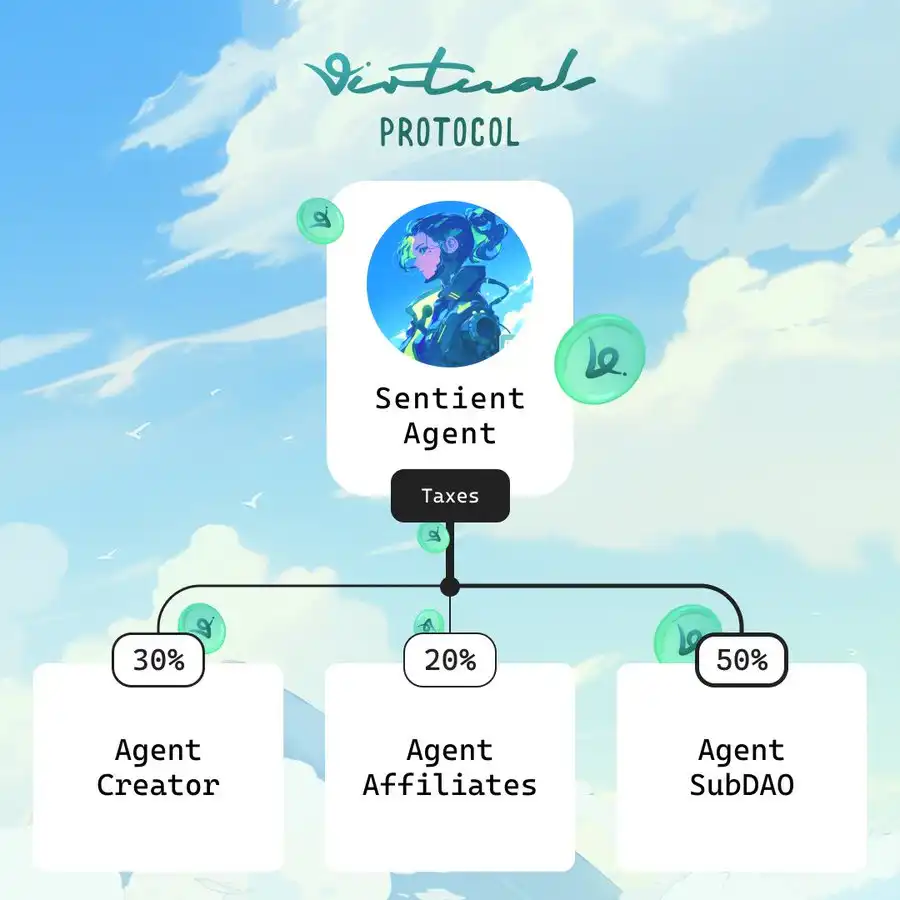
Post-Bonding Tax Distribution: 30% allocated to Agent Creators, 20% allocated to Agent Affiliates, and 50% allocated to Agent subDAO as a reserve fund for future governance decisions;
Creator Reward Distribution: Rewards will be directly sent to the wallet of the proxy deployer.
Agent Affiliates Mechanism: Involves revenue sharing with various trading platforms or interfaces (such as Telegram Bot) within the Virtuals ecosystem. Upon becoming an Agent Affiliate, the platform will receive 20% of the post-bonding tax revenue generated from facilitated trades to incentivize its community and future project planning.
Reason for Upgrade and Impact
Each Virtual token creates a liquidity pool with $VIRTUAL as the paired asset (e.g., AIXBT/VIRTUAL), allowing the platform to accumulate a significant amount of $VIRTUAL as revenue from transaction fees.
However, this revenue cannot be directly liquidated, as doing so may trigger market panic and harm the ecosystem. A decline in the price of $VIRTUAL would also affect the proxy tokens pegged to it. Additionally, mishandling these funds may leave the platform with a substantial tax burden on this unusable revenue.
Therefore, the platform has chosen to utilize this revenue by conducting a buyback and burning of ecosystem tokens.
Beneficiary Token Categories
1. Tokens with Transaction Fee-to-Market Value Ratio:
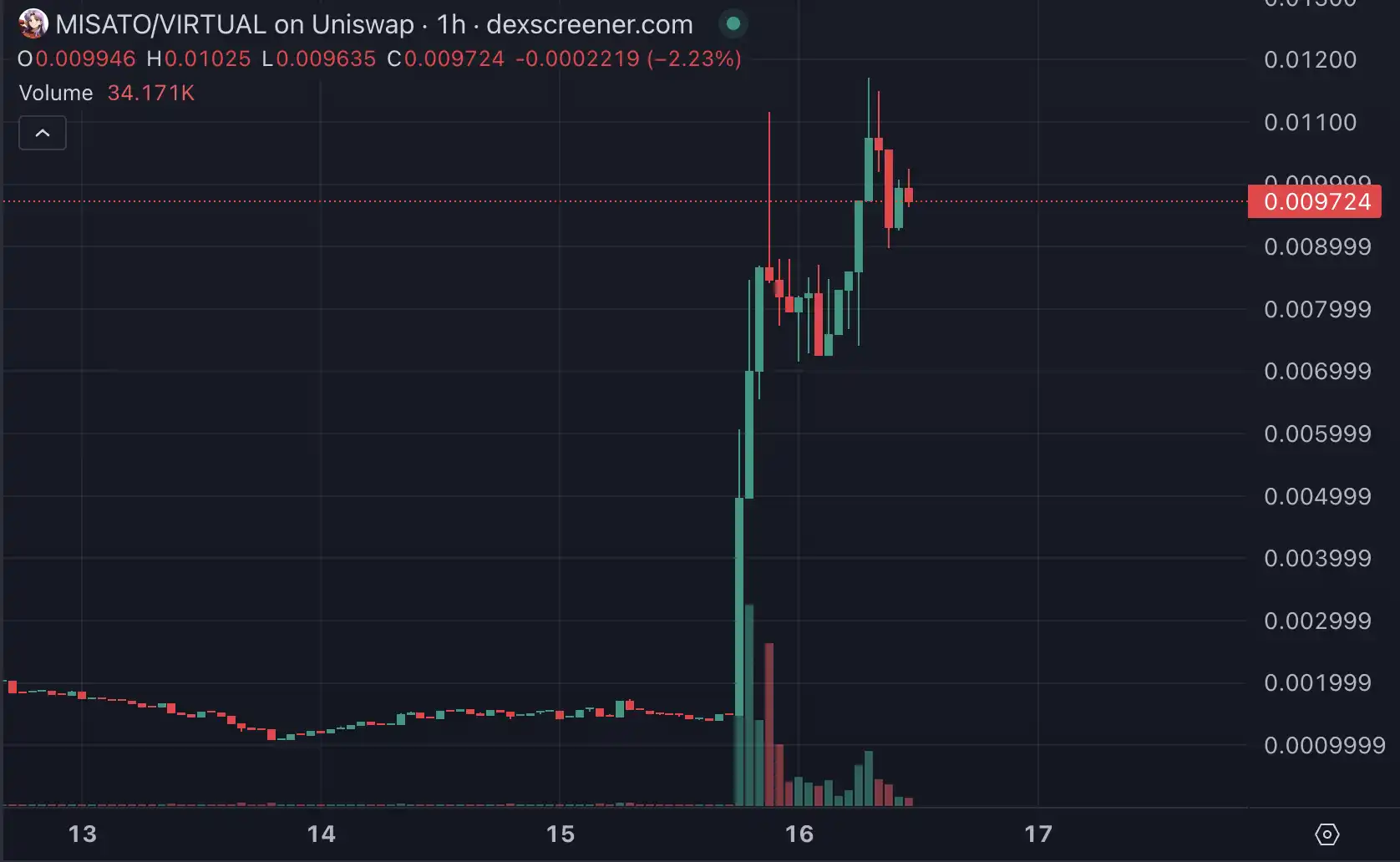
The buyback amount depends on the cumulative amount of transaction fees, so tokens with a large overall trading volume but relatively low market cap will receive a greater proportionate incentive,
such as tokens like MISATO, which saw a significant increase in price due to the buyback announcement.
2. Most Liquidity in Non-VIRTUAL Pairing Pools Tokens
The valuation unit of these tokens (VIRTUAL) is less affected by selling pressure but still benefits from the buyback incentive. For example, $AIXBT actually received around $2.5 million in incentives, but since its primary liquidity is in other pools, it is less affected by VIRTUAL selling pressure.
Affected Groups
1. $VIRTUAL Holders
The significant $48 million selling amount has a notable impact. Previously, the price of $VIRTUAL benefited from the continuous accumulation of fees (equivalent to $48 million in value lock-up).
However, now these fees will be converted to cBTC, starting to exert selling pressure on the market. The positive feedback loop that drove $VIRTUAL's price up has now reversed into a negative loop.
2. Tokens with Only VIRTUAL Pairing Pools or Low Trading Volume
These tokens receive smaller incentives but have to withstand the price pressure from $VIRTUAL selling. The impact is particularly severe on newly issued tokens as they have accumulated less fee income.
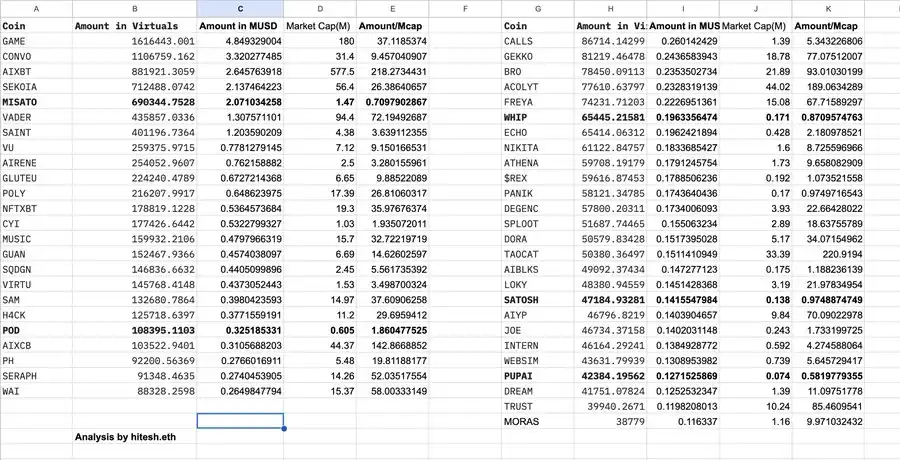
On-chain analyst hitesh.eth analyzed the top 50 tokens based on 30-day Time-Weighted Average Price (TWAP) buyback and burn distribution and found that the buyback pressure on some tokens exceeds their current market value.
How Does the Community View This Buyback?
It can be said that this upgrade has brought stronger value support to the Virtuals ecosystem, but the community has expressed concerns about the updated buyback and distribution model. Some believe that Virtuals chose to sell $VIRTUAL instead of directly burning these tokens. "This approach goes against the best interests of holders and the team, as the team actively created $48 million in selling pressure. For the ecosystem, some of the incentives flowed to agent tokens with liquidity primarily located outside, causing capital outflows from the ecosystem."
The crypto KOL Liam stated that while converting fees to cBTC is the right direction for Virtuals, the platform should significantly reduce the fees to avoid excessive extraction from the ecosystem. Additionally, fee distribution should be standardized based on the token's listing time to put new and old tokens on a level playing field.
However, the view that "buybacks will create significant selling pressure" has been questioned as being inaccurate. This is because these Agent tokens are paired with $VIRTUAL, and buying Agent tokens with $VIRTUAL does not involve selling any $VIRTUAL; it simply adds $VIRTUAL to the liquidity pool. If the liquidity pool is priced in WETH, then $VIRTUAL would first be exchanged for WETH, but that is not the case here.
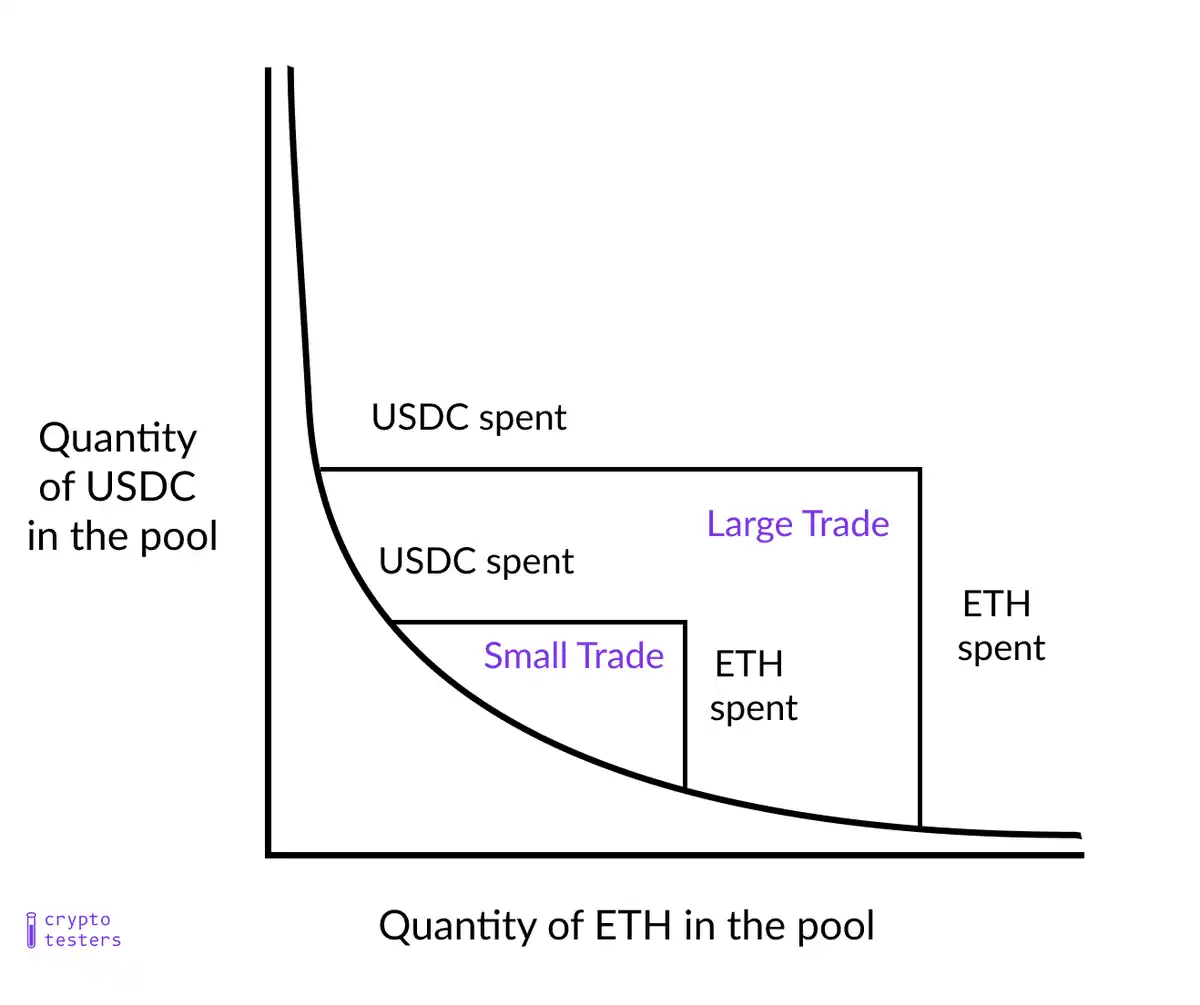
Nevertheless, this will indeed create indirect selling pressure. As the quantity of $VIRTUAL in the liquidity pool increases, the token's value will rise, potentially prompting holders to sell more $VIRTUAL. However, due to the nature of the liquidity pool and price impact, and the fact that the liquidity of many of these tokens is already very low, they cannot directly sell off all the tokens.
Leftcurve DAO member mcSleuth believes that this announcement will not generate direct selling pressure, and the indirect selling pressure is almost negligible, especially considering that the market cap of $VIRTUAL is 36 billion USD and liquidity is very high.
You may also like

Why do I still have confidence in ETH?

CRCL surges and plummets, COIN follows with a dive: The real battle for interests behind the CLARITY Act
What Is TradFi and Why Is Everyone Talking About It in 2026?

From Poland to Paris: A Look Back at WEEX's Global Community Journey in May 2026

WEEX WXT Eco Carnival: How to Join WXT Events and Plan Trading Tasks
The WEEX WXT Eco Carnival is an ecosystem campaign built around WEEX Token (WXT), designed for users interested in platform tokens, spot trading, futures trading, deposit tasks, and referral rewards.

WSJ: Hyperliquid is becoming Wall Street's crypto "convenience store"

Morning Report | Robinhood completes acquisition of WonderFi for $180 million; Anthropic submits IPO draft application to SEC confidentially; Google plans to raise $80 billion in financing

Morning Report | Strategy sold 32 BTC and over 800,000 shares of MSTR last week; Binance officially announced its U.S. stock trading portal; Polymarket reached an exclusive partnership with OneFootball

Zhou Hang: How much is SpaceX really worth?

IOSG: From Coinbase to Upbit: How a Token Completes a 28-Day Journey of Taking Over

Exclusive Interview with Alpaca CEO: What is the background of the US stock underlying service provider behind Binance and Bitget?

Variant: Three types of L1 assets are highly likely to become the main means of value storage

Does the performance on Perp DEX become an "invisible threshold" and "amplifier" for new coins to go live on CEX?

a16z Crypto's latest article: Why do we need to predict the market?

Strategy cashes out 2.5 million USD, but Bitcoin's market value dropped by 80 billion USD in one day
Collective Change of Ownership for Crypto Exchanges? The Positioning Competition Among South Korean Financial Giants

WEEXPERIENCE Trading Bootcamp in Poland: How WEEX & FireCrew Are Making Crypto Trading Accessible to Everyone

Paris Reigns Supreme: How PSG Crushed Arsenal’s Dream in a Historic UCL Final Thriller
Why do I still have confidence in ETH?
CRCL surges and plummets, COIN follows with a dive: The real battle for interests behind the CLARITY Act
What Is TradFi and Why Is Everyone Talking About It in 2026?
From Poland to Paris: A Look Back at WEEX's Global Community Journey in May 2026
WEEX WXT Eco Carnival: How to Join WXT Events and Plan Trading Tasks
The WEEX WXT Eco Carnival is an ecosystem campaign built around WEEX Token (WXT), designed for users interested in platform tokens, spot trading, futures trading, deposit tasks, and referral rewards.
WSJ: Hyperliquid is becoming Wall Street's crypto "convenience store"


